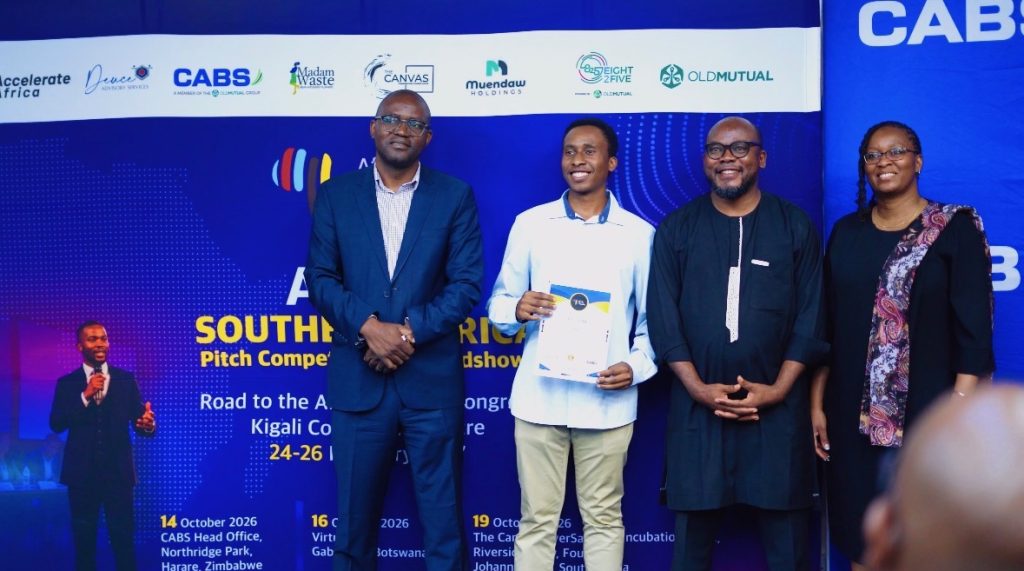
Ten founders pitched their businesses at the Africa Startup Congress (ASC27) Zimbabwe roadshow, competing for an opportunity to represent the country at the 2027 congress in Kigali. Their pitches raised a question that extends beyond the competition: what does it take to turn a promising solution into a business ready to grow?
There is a particular kind of silence that settles over a room just before a founder begins to pitch. Behind it is heavy with potential, charged with the quiet desperation of late nights, half-formed prototypes, difficult decisions and the conviction that a solution to a real problem can become something bigger.
On 15 October 2026, ten founders presented solutions spanning agriculture, sustainability and technology at CABS Northridge Park Auditorium during the Africa Startup Congress (ASC27) Zimbabwe roadshow, competing for the opportunity to represent Zimbabwe at the congress in Kigali in 2027. The session was part of a wider regional roadshow that also included South Africa and Botswana.
The pitches reflected an entrepreneurial community tackling real challenges while navigating infrastructure constraints, limited purchasing power, fragmented markets and the cost of reaching customers.
Tese emerged as the overall winner of the ASC27 Zimbabwe roadshow, earning the opportunity to represent Zimbabwe at the Africa Startup Congress in Kigali in 2027. Its solution addresses a familiar challenge in public transport: cash payments where passengers may struggle to get change. The team will need to strengthen their business case, build relevant relationships and assess how its solution could translate into wider market opportunities.
Supported by ecosystem partners including Eight2Five Innovation Hub, Old Mutual, CABS and Accelerate Africa, the roadshow offered a lens through which to examine four questions that matter as startups build businesses capable of growing beyond their initial markets.
1. Does the Solution Have a Strong Business Case?
A startup can solve a real problem and build working technology without having a viable business model. A large potential market does not guarantee paying customers or a business that can sustain itself.
During the roadshow, Blessmore Tsingozviziva from Old Mutual highlighted the need for commercial sustainability, revenue generation and collaboration to help businesses progress. Tapiwa Rukara from CABS stressed that founders must invest in understanding the business value of their solutions.
The challenge is to demonstrate not only that a solution works, but that it can attract paying customers and generate enough revenue to sustain and grow the business.
2. Can Your Solution Survive the Realities of Its Market?
Technology that works in a demonstration may struggle in the market it is designed to serve. Infrastructure constraints, affordability, existing informal systems and customer behaviour can all affect adoption.
A digital agriculture platform, for example, depends not only on its technology but also on connectivity, buyer participation and workable payment systems. Similarly, sustainability ventures must understand the standards, verification processes and regulatory requirements governing the markets they hope to enter.
During the roadshow, Nomazulu Mthethwa of Eight2Five Innovation Hub stressed that founders must substantiate their propositions against real-world conditions, gather insights to improve their solutions and establish that a market exists.
3. Which Assumptions Could Make or Break Your Business?
Every startup is built on assumptions such as who will buy, what they will pay, how the product will perform and what it will take to reach customers. If these assumptions are wrong, even a promising solution can struggle.
Building on the need to validate a solution against real-world conditions, Uncommon’s representative, Khesani Majoko, urged founders to maintain an assumptions-tracking list. Documenting beliefs about customer demand, pricing, product performance and distribution helps founders identify what remains unproven and prioritise what to test before committing resources to growth.
4. Does Your Team Have What It Takes to Turn Investment into Growth?
As businesses develop, founders must identify the capabilities they need and address gaps through hiring, partnerships or specialist expertise.
The Accelerate Africa team highlighted three essentials in a pitch: the deck, the ask and the team. Founders must communicate what they are building, what support or capital they need and why their team can deliver. Presentation skills and keeping within the allotted time also matter.
Beyond the Competition
The roadshow brought ten startups before a panel of judges, creating an opportunity to test ideas and receive feedback. Its lasting value will depend on how founders translate that feedback into stronger business models, better-informed decisions and measurable progress.
For Tese, the road to Kigali offers an opportunity to take a locally developed solution into a wider continental conversation. For other founders, the challenge is to apply the same discipline without waiting for a competition or investment opportunity to demand it.
For Zimbabwe’s startup ecosystem, progress will depend not only on helping entrepreneurs develop promising solutions, but on equipping them to build resilient businesses that create value at home and compete across Africa.